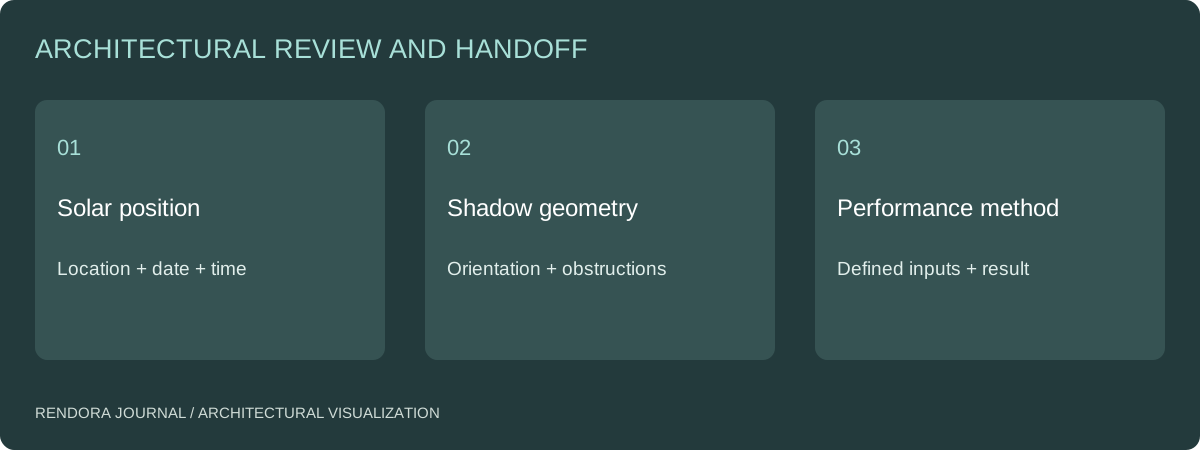
Solar position describes where the sun is. A shadow study also needs geometry and obstruction calculations. Daylight analysis asks a different performance question using its defined method and inputs. Choose the workflow from the decision you need to make, not from how convincing the image looks.
“Can we show the sun?” can mean several things: selecting a pleasant exterior image, understanding when a terrace is shaded, checking a neighboring window relationship or assessing an indoor daylight target. These tasks should not share one undifferentiated approval label.
Separate the question into four levels
| Task | Necessary basis | Useful output |
|---|---|---|
| Visual lighting condition | Declared artistic or geographic settings | Labeled image |
| Solar position | Location, date and time convention | Sun altitude and azimuth |
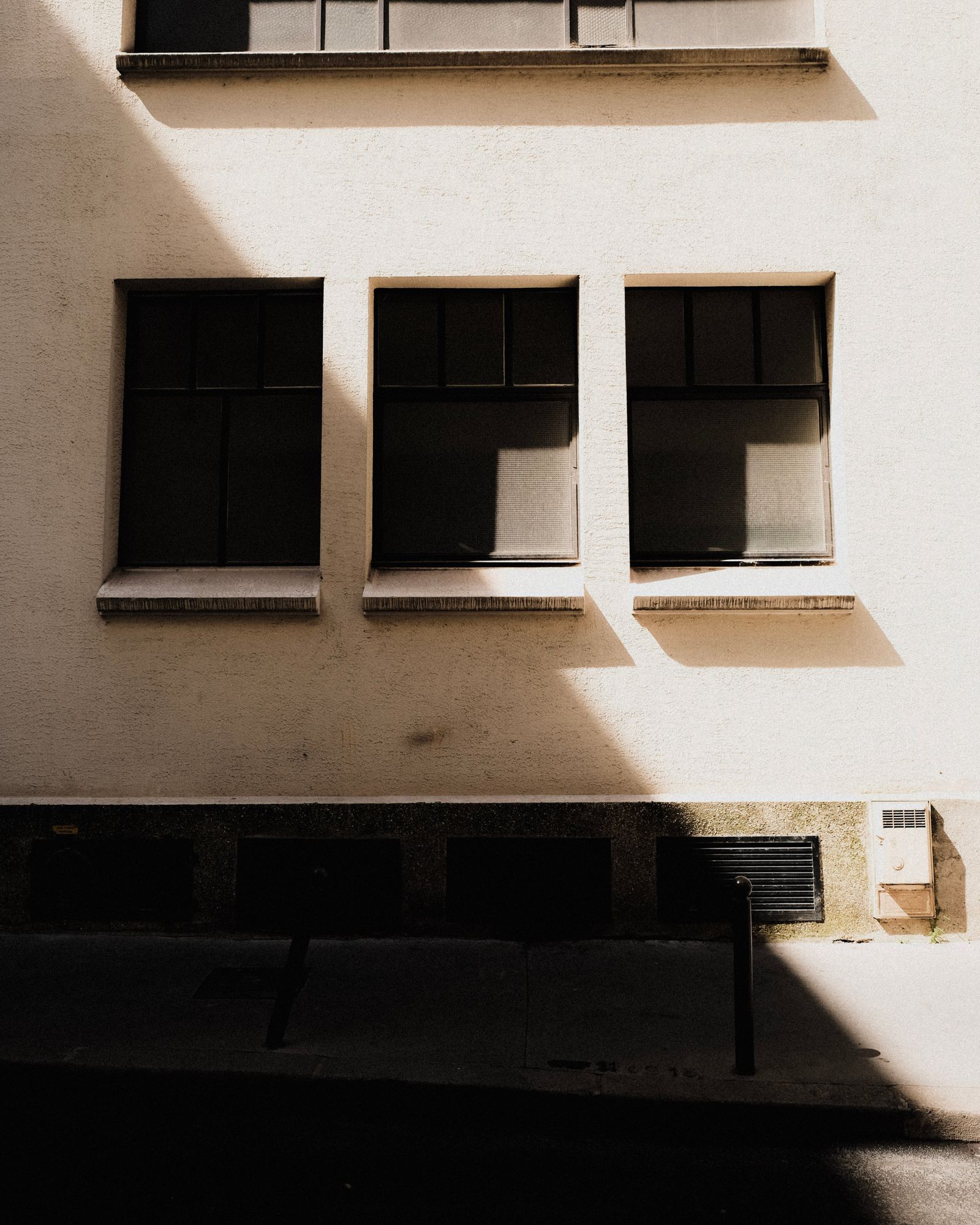
| Geometric shadow review | Solar basis plus oriented geometry and obstructions | Shadow images at stated conditions |
| Daylight performance assessment | Defined assessment method and its required model inputs | Method-specific results and report |
The last row is not simply a higher-resolution version of the first. A method may need material properties, glazing, calculation settings and environmental data that are absent from an illustrative view. Define those requirements with the person responsible for the assessment.
Record time in a way another person can reproduce
State location, date, clock time, time zone convention and orientation. Clarify daylight-saving treatment when relevant. Keep the model’s north direction separate from a drawing layout that has been rotated for convenience.
SketchUp’s shadow documentation lists location, cardinal orientation and time zone among its calculation inputs, with date and time controls for the displayed condition.[1] These are meaningful review inputs. They should appear in the record beside the image rather than being reconstructed from a screenshot later.
For a comparison, hold the date, time and context model fixed across design alternatives. If the purpose is seasonal exploration, vary the time condition deliberately and keep the design fixed. Changing both at once makes the cause of the visible difference harder to interpret.
Know what the current Rendora output calculates
Rendora’s architecture delivery currently includes a simplified solar-position calculation and a timeline graphic based on supplied location, date and time-zone offset. The calculation uses an approximate declination and solar-hour relationship. It does not calculate cast shadows from the surrounding buildings, indoor daylight or a statutory compliance result.
That output can organize an early discussion about time conditions. For an actual obstruction question, take the verified geometry and the recorded conditions into an appropriate shadow workflow. For a performance or approval submission, use the required assessment method and responsible reviewer. The site-coordinate handoff supplies the positioning discipline needed before either task.
Design a review that exposes missing inputs
Write the receiver being studied: terrace, facade, window or another defined surface. Identify which surrounding objects can affect it and how their geometry was obtained. A neighbor modeled as an approximate box should remain labeled as approximate.
Choose time conditions for the actual question. Record why those conditions were selected and which other conditions remain untested. Do not present a handful of favorable images as a complete annual assessment. If a project requirement defines dates, intervals or reporting, adopt that requirement rather than substituting a convenient montage.
Retain the baseline model and the proposed model separately. Compare them with the same context, cameras and calculation settings. Capture any model revision that changes the outcome, including a corrected neighboring height. That change is evidence about the inputs, not necessarily about the proposed design.
Package the result by method
Deliver the question, input record, source revisions, calculation or rendering method, settings, outputs and open assumptions. An observer should be able to tell whether a graphic is an illustrative scene, a solar-position timeline or a geometry-based result without guessing from its appearance.
Use the sun-study intake sheet to assign missing information and record the selected method. The architecture tool can organize the scenario and early solar timeline; keep the final assessment report linked to its actual method and source model.
Sun-study questions
Does a shadow in a browser prove a daylight requirement is met?
No. The requirement defines the evidence. A browser image may help explain a design, but a daylight performance conclusion needs the applicable method, inputs and review.
Can two options be compared before every surrounding detail is modeled?
For a scoped early discussion, identify the simplified context and keep it fixed. Before drawing a conclusion that depends on an omitted obstruction or uncertain height, obtain that information and rerun the relevant review.
References
[1] SketchUp Help, Casting real-world shadows. Rendora capability statements are based on the current architecture delivery implementation; the workflow distinctions above define the evidence needed for each task.
About the author
Rendora Journal covers configurable assets, production checks and traceable delivery workflows.