In this guide
Choose a rug size by how it relates to the actual seating arrangement and circulation route. Compare available product dimensions in the room plan, then test the preferred footprint on the floor. A rug that looks balanced by itself may not connect the furniture you want to group.
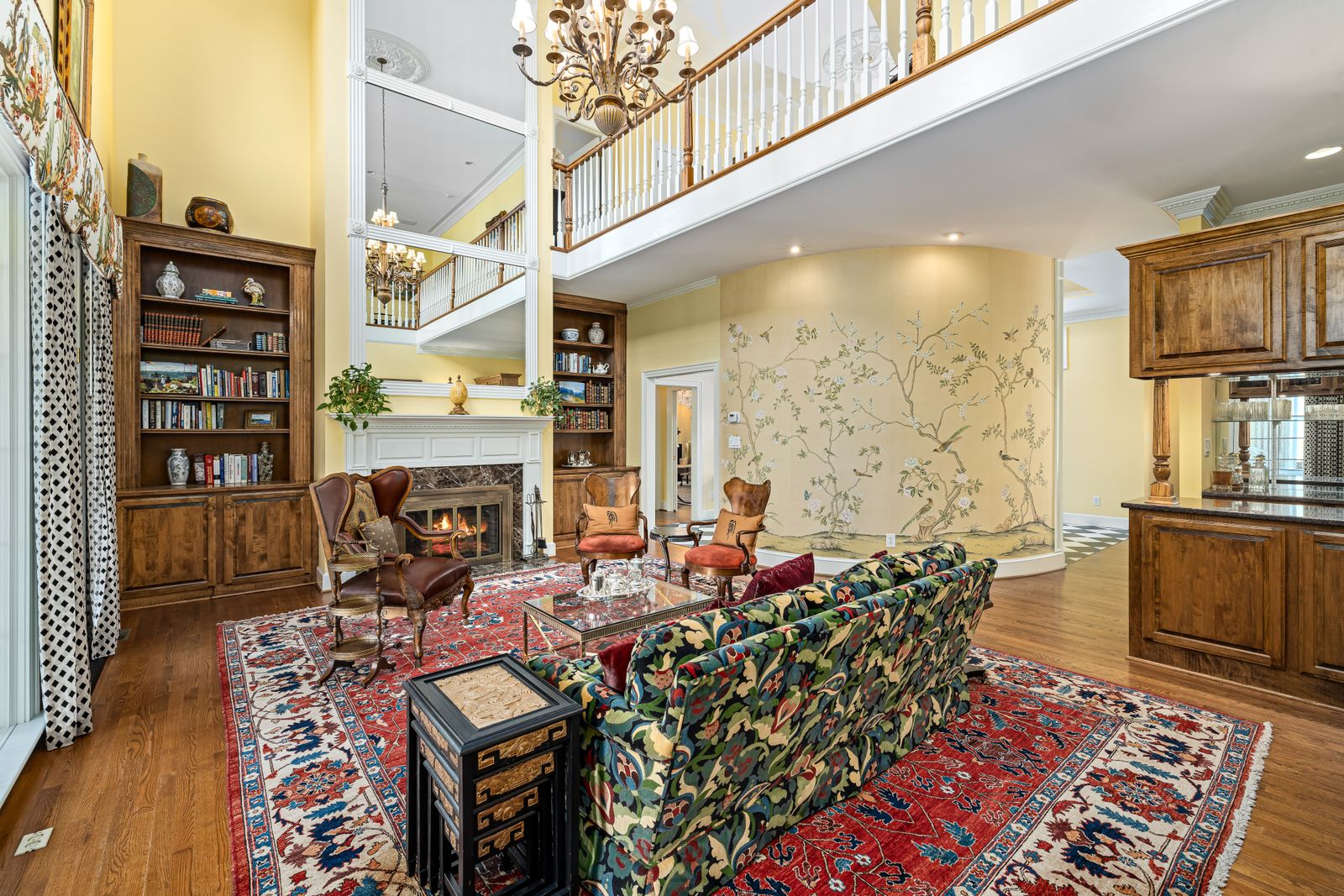
In the photograph, the rug helps describe a seating zone within a larger room. That relationship—not a universal margin around every sofa—is the useful starting point.
Decide which furniture belongs to the zone
List the seats and tables you want the rug to connect. Decide whether furniture legs should sit fully on it, partly on it or outside it, then apply that intention consistently. IKEA’s rug-size guide illustrates different furniture relationships.1 Treat those arrangements as choices to test against your room.
If the sofa configuration is still changing, settle its footprint first. The modular-sofa review explains how to avoid comparing rugs against an unspecified sectional.
Compare products you can actually buy
Use the listed dimensions of each candidate, not a stretched generic rectangle labeled “large.” Record the product identifier and whether the stated dimension includes fringe or other edges relevant to placement. Keep any supplier dimension qualification with the comparison.
| Candidate check | Why it changes the decision |
|---|---|
| Actual available size | A visually ideal custom rectangle may not match a stocked product |
| Seat-leg relationship | Small shifts can disconnect a chair from the group |
| Doors and transitions | The rug boundary may intersect a moving leaf or route |
| Pattern orientation | Rotating a patterned rug changes its relationship to the room |
| Edge and underlay | The selected assembly needs practical review in place |
Make a taped-footprint comparison
Mark two candidate boundaries on the floor using a method suitable for the surface. Keep the furniture in its intended positions. Take a plan-like record and a photograph from the main entry, then sit in the usual seats and use the route around them.
Record what each size improves or worsens. “Front chair legs leave the rug when the chair is pulled into use” is a useful observation. “Looks expensive” does not explain whether the arrangement works. Where thickness or door interaction matters, use the actual sample or product information rather than a flat tape line alone.
Review color after the footprint
Once the size works, compare the actual material and pattern reference under the room’s intended observation conditions. A scaled photograph can illustrate pattern placement, but it does not establish physical color or texture. Keep the sample identifier in the finish schedule.
Do not change rug size and camera framing simultaneously when asking a client to choose. Use a common room view so the footprint difference stays visible.
Save a purchase-ready record
Download the rug comparison worksheet. Record the accepted size, orientation, product identity, furniture relationship and any unresolved physical check. The Rendora interior workflow is the relevant entry for keeping room and furnishing references together.
Is the largest size always better?
No. Compare the intended seating group, openings and routes. A larger rug can unify one arrangement while extending into an unwanted transition in another.
References
- IKEA, How to choose the right rug size, reviewed October 26, 2026.
About this guide
Rendora publishes practical guides for teams working with configurable 3D assets and traceable production handoffs. Updated October 27, 2026.